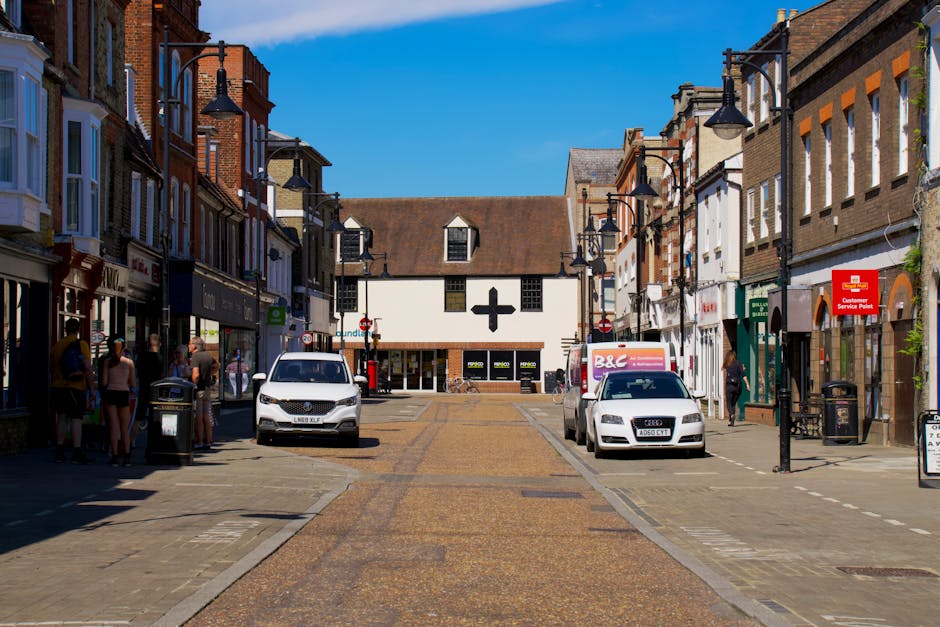
Welling High Street removals for tight access jobs: a practical guide for awkward moves
Moving on or near Welling High Street can look straightforward on a map and still turn into a puzzle in real life. Shared entrances, narrow stairwells, limited waiting space, busy pavement traffic, awkward parking, and multi-storey flats can all make a normal move feel much more complicated. That is exactly why Welling High Street removals for tight access jobs need a different level of planning, equipment, and judgment.
If you are dealing with a basement flat, a top-floor walk-up, a narrow hallway, or a property where the van cannot park directly outside, the move is still manageable. It just needs the right approach. In this guide, we explain how tight-access removals work, what to expect, how to prepare, and which choices make the biggest difference on the day. You will also find a checklist, a comparison table, and practical tips drawn from real moving scenarios rather than vague theory.
If you are still weighing up options, it may help to read our broader removal services in Welling page, or look at our man and van Welling service for smaller moves where access is part of the challenge. For more advice on packing and timing, our guides on efficient packing hacks and delivery at the best time for you are also useful starting points.
Table of Contents
- Why Welling High Street removals for tight access jobs Matters
- How Welling High Street removals for tight access jobs Works
- Key Benefits and Practical Advantages
- Who This Is For and When It Makes Sense
- Step-by-Step Guidance
- Expert Tips for Better Results
- Common Mistakes to Avoid
- Tools, Resources and Recommendations
- Law, Compliance, Standards, or Best Practice
- Options, Methods, or Comparison Table
- Case Study or Real-World Example
- Practical Checklist
- Conclusion
- Frequently Asked Questions
Why Welling High Street removals for tight access jobs Matters
Tight access is not a minor inconvenience; it can decide whether a move runs smoothly or grinds to a halt. On busy streets and in older buildings, the main risk is not usually the item itself. It is the route. A sofa may fit through a door, but not around a sharp landing turn. A fridge may be fine in the kitchen, yet impossible to get down a narrow staircase without planning. A piano, bed frame, or large wardrobe adds another layer of complexity.
On streets like Welling High Street, access issues often include:
- restricted stopping space for the vehicle
- shared entrances and communal hallways
- steep or uneven steps
- tight corners and low ceilings
- door widths that leave little margin
- limited time windows for loading and unloading
These problems matter because they affect safety, timing, and cost. A team that understands tight access can reduce the chance of damage to your property, the building, and the furniture itself. They can also plan the move so you are not stuck with a van in the wrong place and half a hallway blocked by a bookcase. Not ideal, to put it mildly.
The best tight-access removals do not rely on brute force. They rely on assessment, sequencing, and the ability to adapt quickly. That is especially true where properties are compact, older, or shared with neighbours who also need space to pass.
How Welling High Street removals for tight access jobs Works
A proper tight-access move starts long before anyone lifts a box. The key is to assess the route from property to van and identify the pinch points in advance. In practice, the job usually follows a simple pattern.
1. Access is checked before moving day
You or the mover should confirm the likely route: front entrance, hallway, internal stairs, lift access if available, parking restrictions, and any obstacles such as low railings, intercom doors, or narrow external pathways. If there is anything unusual, photos help a lot. A quick image of the staircase or doorway can prevent a long chain of surprises later.
2. Items are matched to the route
Not all furniture should be handled the same way. Some items are best moved upright, others flattened, and some disassembled first. This is where experience matters. A big mistake is treating every object as if it were simply "a bit heavy." Shape matters just as much as weight. A light chair with awkward arms can be more frustrating than a heavy box that stacks neatly.
3. The loading plan is adjusted to the street
If the vehicle cannot park directly outside, the team may need to use a shorter carry, park around the corner, or stage items in a safe holding area before loading. On some jobs, moving one item at a time is safer than trying to create a crowded relay of boxes through a narrow entryway. Efficiency is good. Bottlenecks are not.
4. Protective materials are used where needed
Blankets, straps, wraps, and door protection help reduce scuffs and impacts. For tight staircases, corners may need extra shielding. For delicate furniture, wrapping can be more important than speed. If the item is valuable or sentimental, slow and steady usually wins.
5. The route is managed in the right order
Items are loaded and unloaded according to size, fragility, and urgency. Heavy pieces normally go first or last depending on the load plan, while fragile items are kept secure and accessible. If you are moving on a fixed schedule, it may also make sense to coordinate with a delivery time that suits your day rather than forcing a rushed slot into an already awkward access window.
Key Benefits and Practical Advantages
There is a reason people look for specialist help with difficult access rather than trying to improvise. The benefits are practical and immediate.
- Less risk of damage: careful handling reduces wall scuffs, broken fittings, and scratched furniture.
- Better use of time: a team that understands access constraints wastes less time trying unsuitable routes.
- Lower stress: once the access problem is solved, the whole move feels more manageable.
- Safer lifting: fewer awkward turns and less guesswork means lower risk for the people carrying items.
- More flexibility: experienced movers can adapt when the original plan changes on the day.
There is also a subtler advantage: confidence. If you know someone has already handled similar jobs in cramped hallways, shared flats, and awkward street parking situations, you are less likely to second-guess every decision. That calm matters more than people think.
For smaller loads, the right option may be a man with van in Welling service. For larger household moves, you may want a more structured house removals Welling approach. The best choice depends on the number of items, the route, and how much handling the property demands.
Who This Is For and When It Makes Sense
This type of removals service is not just for "difficult" moves in the dramatic sense. It is for everyday situations where the building or street layout simply makes access harder than average.
It makes sense if you are:
- moving from a flat above a shop or business on the High Street
- dealing with narrow stairs, small landings, or awkward internal bends
- relocating furniture from a property with no direct parking access
- moving in or out of a shared building with limited hallway space
- handling bulky items such as wardrobes, sofas, mattresses, or pianos
- short on time and need a service that can adapt quickly
It is also useful for landlords, letting agents, students, and families moving between compact homes. Student moves in particular often involve a mix of stairs, boxes, and tight timeframes, which is why a dedicated student removals Welling option can be a smart fit.
There are cases where storage is the smarter choice. If a corridor is being renovated, or you are waiting for keys, a short stop at storage in Welling can ease the pressure and let you move in phases instead of forcing everything through one awkward afternoon.
Step-by-Step Guidance
If you want a tight-access move to go well, do not leave the details until the van arrives. The more you prepare, the less likely the day is to unravel. Here is a practical sequence that works well in real life.
Step 1: Measure the access route
Measure doorways, halls, stair width, and the tightest turns. If the item is large, compare its dimensions with the narrowest point on the route. A tape measure is useful, but so are photos from different angles. Measurements without context can be misleading.
Step 2: Identify items that may need dismantling
Flat-pack wardrobes, bed frames, large tables, and modular shelving often move better when taken apart. Keep screws, bolts, and fittings in labelled bags. If you are moving a bed, a guide such as simplifying bed and mattress moving can help you avoid the classic "where did the fixings go?" problem.
Step 3: Declutter before the move
Every unnecessary item creates extra handling in a tight space. Decluttering is not just tidy-thinking; it reduces risk. Fewer boxes mean fewer collisions with walls, fewer trips up the stairs, and less clutter in the hallway. If you need a practical starting point, see this decluttering guide for moves.
Step 4: Pack with access in mind
Heavy items should be packed into smaller boxes rather than overloaded into one container. Keep essentials separate so you are not digging through twelve boxes at the end of a long day. Our article on packing hacks for your next house move is useful if you want a more streamlined approach.
Step 5: Reserve the right service level
Some jobs need a basic van and careful carrying. Others need a more comprehensive service with multiple people, lifting tools, and route planning. If you have large, awkward, or fragile items, the service should reflect that. For specialist furniture, our furniture removals Welling page is a helpful reference.
Step 6: Confirm timing and parking assumptions
Do not assume there will be convenient parking at the exact front door. If access is tight, build in buffer time. If loading has to happen during a quieter street window, arrange it in advance. If you need a faster turnaround, a same-day removals Welling option may suit urgent situations, but the access details still need to be accurate.
Step 7: Keep the path clear on the day
Hallways, stairs, and landings should be free of loose mats, shoes, toys, cables, and anything else people might trip over. It sounds obvious, yet this is one of the most common causes of delay in tight spaces.
Expert Tips for Better Results
Here is where small decisions pay off. Tight access jobs are rarely won by one dramatic move. They are won by dozens of sensible ones.
- Use smaller box sizes for books and heavy household items. That one change can prevent unnecessary strain and make stair carries much safer.
- Label by destination and priority. Not just "kitchen" or "bedroom," but also "open first," "fragile," or "last out."
- Keep the most awkward items apart. Do not pile the mirror, lamp, and vacuum cleaner together and hope for the best.
- Protect corners before the move starts. Damage is easier to prevent than to explain later.
- Take apart what you reasonably can. The aim is not to dismantle the whole home. Just remove the barriers that make the route unnecessarily hard.
If you are moving something unusually sensitive, such as a piano, it is worth treating the job as a specialist task rather than a standard move. Our article on why piano moves are not a DIY task explains why. For dedicated handling, see piano removals Welling.
Also, if an item is in long-term storage or needs extra protection during a staged move, guides like sofa care and storage tips and freezer storage methods can prevent avoidable damage between homes.
Expert summary: For tight access jobs, the winning formula is simple: measure early, pack light, protect the route, and choose a service that understands awkward buildings rather than one that just owns a van.
Common Mistakes to Avoid
Most tight-access issues are predictable. That is good news, because predictable problems are easier to solve before they cost time or money.
Underestimating the route
One of the biggest mistakes is looking only at the front door and forgetting the staircase, landing, and parking distance. The full path matters, not just the first ten seconds of it.
Overpacking boxes
A box that is too heavy becomes harder to turn, lift, and stack. In a narrow hallway, that extra weight becomes a real risk. Keep the load manageable.
Leaving dismantling too late
If furniture has to come apart, do it before the pressure of moving day. Last-minute dismantling in a cramped room slows everything down and usually creates more confusion than progress.
Ignoring neighbour and building access
In shared buildings, courtesy matters. Letting others know about the move can help avoid conflict in a tight space, especially if communal access is involved.
Not telling the mover about the awkward bits
If there is a steep step, a locked gate, a low arch, or a strict parking restriction, say so early. A good team can handle bad news. What they cannot handle is surprise bad news.
For a smoother overall experience, it can also help to read move your home without stress and cleaning tips before leaving. The more complete your planning, the less likely the day is to go sideways.
Tools, Resources and Recommendations
The right tools do not replace skill, but they do make difficult access safer and more efficient. For these jobs, useful equipment typically includes:
- furniture blankets and wrapping materials
- removal straps and lifting aids
- trolleys or dollies for suitable floor surfaces
- protective corner covers
- tool kits for dismantling beds, desks, and wardrobes
- strong packing tape and clearly labelled boxes
- gloves with a secure grip
Good resources are just as important as physical tools. Before your move, consider these pages if they match your situation:
- packing and boxes in Welling for supplies and box planning
- removal van Welling if you want to understand vehicle fit and load space
- removal companies in Welling if you are comparing providers
- services overview for a fuller look at what is available
If your move includes a freezer, a sofa, or another bulky household item, specialist content can be useful before and after transit. For example, our guides on freezer storage methods and long-term sofa storage solutions cover the sort of practical details that prevent damage later.
Law, Compliance, Standards, or Best Practice
For most domestic moves, the main compliance concerns are practical rather than complicated. The mover should work in a way that is safe, courteous, and consistent with good industry practice. That usually includes keeping walkways clear, handling items responsibly, and using suitable equipment for the job.
If parking or loading takes place on a public road, local restrictions and temporary stopping rules may matter. In busy areas, it is sensible to check whether the vehicle can stop legally and safely before moving day. If access involves a shared building or an apartment block, building rules may also apply. These can include lift booking, time windows, or restrictions on where items can be placed temporarily.
Health and safety should also be taken seriously. A reputable mover will aim to reduce manual-handling risks, especially where stairs, awkward turns, or heavy loads are involved. If you want to understand how a provider approaches those obligations, review the health and safety policy and the insurance and safety information before booking.
For ethical and operational transparency, it is also reasonable to check general business pages such as terms and conditions, payment and security, and, if relevant, accessibility information. These do not make the move easier by themselves, but they do help you understand the service you are hiring.
Options, Methods, or Comparison Table
Not every tight-access move needs the same solution. The right method depends on the volume of items, the route, and how much physical handling the job involves.
| Method | Best for | Strengths | Limitations |
|---|---|---|---|
| Small van with careful manual carrying | Light moves, a few rooms, compact flats | Flexible, efficient, often ideal for short notice | May be limited for bulky furniture or long carries |
| Full removals team with route planning | Larger domestic moves or awkward properties | Better handling of heavy items and access issues | Usually more planning required |
| Partial dismantling and reassembly | Wardrobes, beds, shelving, large tables | Improves fit through narrow spaces | Needs tools and time on both ends |
| Staged move with storage | Renovations, delayed keys, access bottlenecks | Reduces pressure on the day | Requires extra coordination and a second transfer |
If you are unsure which route to choose, compare the options against your access limitations rather than just the number of boxes. A move with six awkward items can be more demanding than a move with thirty tidy ones. Reality has a way of being less convenient than spreadsheets.
Case Study or Real-World Example
Consider a typical Welling High Street scenario: a one-bedroom flat above a shop, a narrow internal staircase, and limited roadside stopping space. The move includes a sofa, a bed frame, two bookcases, a fridge freezer, and several boxes of mixed household items.
At first glance, it looks manageable. But the staircase has a turn halfway up, the landing is small, and the freezer cannot be tipped or dragged safely. In that situation, a good plan would look something like this:
- measure the stair width and landing turn before move day
- remove the bed frame and bookcase shelves in advance
- wrap the sofa corners and protect the walls near the turn
- carry the freezer using a suitable two-person technique
- park the van in the nearest safe stopping point rather than forcing a risky stop
- load boxes by weight, not by whatever happens to fit on top
The result is not necessarily a faster move in the abstract. It is a better one. Less damage, fewer delays, and a lot less strain on everyone involved. That is the real value of working with people who understand access constraints rather than treating them as an afterthought.
In jobs like this, the best outcome often comes from simple communication and realistic expectations. If the route is awkward, say so. If an item is unusually valuable or difficult, say so. The team can then decide whether the move needs extra hands, a different vehicle setup, or more time.
Practical Checklist
Use this checklist before your moving day. It will help you avoid the most common access problems.
- Measure doorways, stairs, and any tight turns
- Take photos of the route and any awkward points
- Tell the mover about parking, loading, and time restrictions
- Book a service that suits the size of the load
- Disassemble bulky furniture where possible
- Pack heavy items into smaller boxes
- Label boxes clearly by room and priority
- Protect floors, corners, and narrow wall sections
- Clear hallways, stairs, and entrances before the team arrives
- Check whether storage might be useful for part of the move
- Keep keys, documents, and essentials in a separate bag
- Confirm the contact details and arrival window in advance
Quick reminder: access problems become much easier when you prepare the route instead of just the furniture.
Conclusion
Tight-access removals on or around Welling High Street are absolutely workable, but they demand more than a standard van-and-go approach. The key is to plan for the route, not just the items. Once you think in terms of stairs, corners, stopping space, and safe carrying, the whole move becomes more predictable.
For many people, the smartest move is to choose a service that already understands awkward access, then prepare the property carefully before moving day. That combination reduces risk, saves time, and makes the day feel less like a scramble. If you are comparing services or need help working out the right setup, take a look at our removals Welling page or explore the wider removal services available locally.
Get a free quote today and see how much you can save.
If your move is urgent, awkward, or simply too tight for a standard plan, start with a quick conversation and a few photos of the access route. That small step can prevent a lot of unnecessary stress later.
Frequently Asked Questions
What counts as a tight access removal job?
A tight access job is any move where the route is restricted in a way that makes handling furniture or boxes more difficult. That could mean narrow stairs, limited parking, small doorways, awkward turns, or shared entrances.
Can a sofa be moved through a narrow staircase?
Sometimes, yes, but it depends on the size of the sofa and the shape of the staircase. Measuring both the item and the route is the safest way to judge whether it will fit without damage.
Do I need to dismantle furniture before a tight-access move?
Often, yes. Beds, wardrobes, shelving, and some tables move much better when partially dismantled. It also reduces the chance of scraping walls or getting stuck on a landing.
How do movers handle parking on busy streets?
They usually plan the nearest legal and safe stopping point, then carry items the remaining distance. For busy roads, timing, communication, and realistic loading plans matter a great deal.
Is a man and van service enough for difficult access?
It can be, if the load is small and the access issue is manageable. For heavier, bulkier, or more complex moves, you may need a more complete removals service with extra support.
How should I prepare for a High Street move with limited space?
Measure the route, declutter early, pack smaller boxes, clear hallways, and share photos of the access points with the mover. Good information before the job usually saves time on the day.
What items are most difficult in tight access properties?
Large sofas, fridge freezers, pianos, mattresses, wardrobes, and anything awkwardly shaped or fragile tend to cause the most difficulty. Shape and turning space matter as much as weight.
Can storage help with a difficult move?
Yes. Storage can be useful if access is temporary restricted, if you are moving in stages, or if you want to reduce pressure during renovations or key delays.
Are tight-access moves more expensive?
They can be, depending on the extra time, handling, and planning involved. The exact cost depends on the property layout, the volume of items, and the amount of manual work needed.
What should I tell the removals company before booking?
Tell them about stairs, lifts, parking limits, loading distances, bulky items, and any time restrictions. The more accurate the details, the better they can plan the right service.
What if my building has strict access rules or time windows?
Let the mover know as early as possible. Some buildings require booked lift slots, specific moving hours, or certain entry arrangements, and those details can affect the whole schedule.
How do I choose the right service for a tight-access move?
Choose based on the route, not just the item count. If the property is awkward, a service with strong experience in narrow entries, stairs, and careful handling is usually the safer bet.
For any move involving awkward access, the simplest next step is often the best one: share the details early, ask a few practical questions, and make sure the service fits the building as well as the load.